
Exhibitions
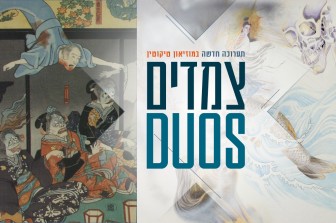
Duos
The "Duos" exhibition connects between traditional Japanese woodblock print artists and contemporary Japanese and Israeli artists. The first duo, Hiroshige X Tabaimo, is a connection between one of the greatest 19th century print artists, Utagawa Hiroshige, and the contemporary video artist Tabaimo. The second duo, Kuniyoshi X Kuperman, is a connection between the woodblock print artist Utagawa Kuniyoshi and the Israeli painter Ruven Kuperman. The connecting point of another duo, Hokusai X Balaban, is the aesthetics of images of warriors with a special emphasis on movement, and these are depicted in the warrior books of the artist Katsushika Hokusai and translated to the unique and refined language of the artist Yael Balaban.
Saturday, 25.05.24
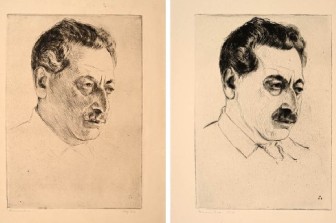
Reproductions and Expressions
The collection was started by Tzvi Neta’s father, Mr. Yosef (Joe) Boxenbaum, one of Israel’s first industrialists and a passionate Zionist, who purchased the works about two decades after Struck’s death, apparently from the artist’s widow. Much can be learned about Struck’s creative processes from this collection. Many of the prints were copies but not duplicates. Comparing them reveals much about the depth of thought involved in Struck’s work process. For this reason, I asked to curate an exhibit based on Mr. Neta’s donation.
Saturday, 04.05.24
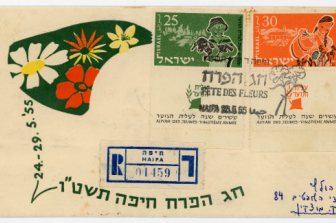
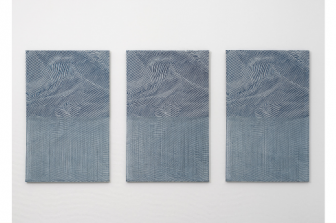
Earth, water, wind, fire…and emptiness
Earth, water, wind, fire... and space are the elements that make up the entire universe. They are part of an ancient doctrine that used them as a means of solving problems, and from that time they have been an inseparable part of a variety of disciplines - philosophy, art, medicine, astrology and even politics. The connection between the elements emphasizes the basic concept that they nurture each other and that every element in our world is mutually dependent on another and does not exist separately. This exhibition seeks to illuminate all five elements in the light of art and to present the interrelationships between them through the works shown.
Saturday, 18.11.23
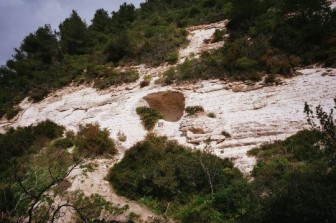
WADI
Wadi - is a hydrologic geological formation, and a term in Arabic, Hebrew, and English describing different forms of seasonal flow, associated with areas with little precipitation.
In Haifa, however, a wadi is also a mental state; the city's wadis are used for momentary respites from the routine, for various games, and for alternative community gatherings. At the same time, they also embed darkness, all sorts of waste, and complex ecosystems of flora and fauna, which exist in a world parallel to everyday life.
The exhibition addresses different manifestations of this alternate universe.
Saturday, 30.12.23
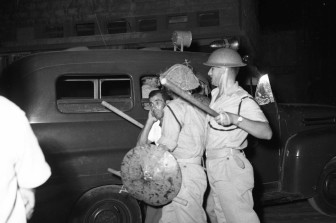
Choreography of Resistance
The exhibition juxtaposes three works by international artists delving into the universal characteristics of the gestures of the protesting body, with four series of photographs from four significant protests in local history.
Saturday, 30.12.23
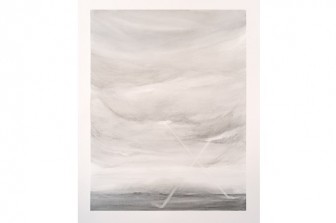
Vital Signs: Pulse and Breathing Rhythm in Contemporary Art
Oded Hirsch's works are based on detailed scripts for absurd situations. He invents challenges and problems that need to be solved, providing a complete scenario for their solution. The solution is usually just as far-fetched as the challenge, and the works leave the viewer wondering about the very necessity of these actions: Why is it necessary to pull out a tractor buried in the ground, lift it upwards, and introduce it into the museum?
The pulse and breathing rates are among the vital signs by which physicians determine whether a person is healthy, sick, or dead. The vital signs are directly affected by one's emotional state: they change in moments of calm or excitement, fear or infatuation. The exhibition features some of the real products of these vital signs in works of art from the past twenty years. Lines, lights, and sounds are generated as the work of art is adapted to the heartbeats and the cycle of inhalation-exhalation, which determine the structure of the work. This rhythm—whether calm and regular, fast and fidgety, or completely still—may guide one into the depths of consciousness. Alternatively, it can make us conscious of those who are bleeding or those who have been deprived of air to breathe.
Saturday, 24.06.23
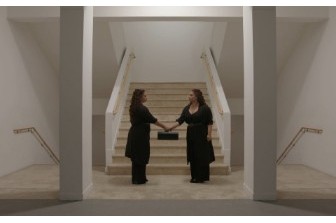
Nardeen Srouji: My Playground
Nardeen Srouji opens the windows and introduces a storm into the museum. The wind reveals historical layers of the building, inaugurated in 1930 as a girls' school of the Anglican Church, which was open to girls from all religious groups in the city, and its language of instruction was predominantly Arabic. Performing a series of interventions in the space, Srouji digs into the place’s past, uncovering echoes from the British Mandate period in the form of a tower of chairs about to collapse, texts in Arabic, and the sound of footsteps in the stairwell. The colorful past bursts forth through the gray concrete floor, springing up between the cracks that opened in white museum pedestals.
Sunday, 01.01.23
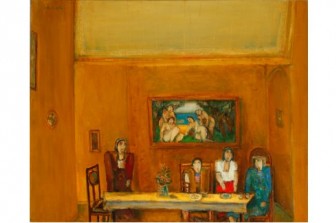
Shmuel Bonneh: From the Land of the Bible to the Great Sea
In 1971, the Haifa Museum of Art held a retrospective exhibition for Shmuel Bonneh. Almost 50 years later, the Mané-Katz Museum is proud to present Bonneh's rich artistic career, in an exhibition showing a selection of his best works.
Thursday, 30.09.21
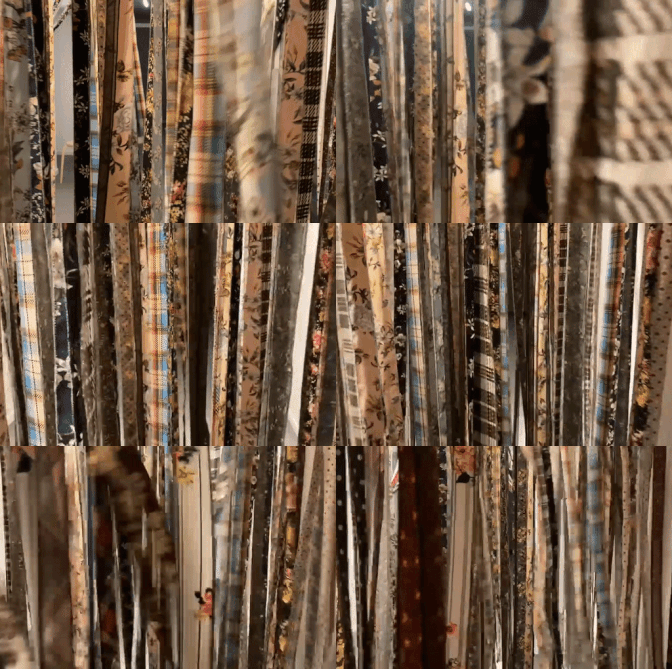
North Window
Wind is a gust of air that can be felt, but not seen. According to the Jewish Sages, King David's lyre hung opposite the north window in his bedroom, and when a north wind blew in, the lyre would play by itself. A north wind can be an air movement coming from the north, and it can also be all the tangible and intangible things that the north represents.
Sunday, 01.01.23
Please contact us and we will contact you as soon as possible